

Overview
This project involved a local medical clinic seeking to improve its online visibility, patient inquiries, and inbound calls from Google Search and Google Maps.
Although the clinic already had a website, a Google Business Profile, and positive patient reviews, performance was inconsistent. Visibility varied across service areas, calls fluctuated, and important “near me” searches often triggered the wrong pages.
The objective was to create clarity, trust, and consistency across local search results while remaining compliant with healthcare best practices.
Challenges
At the start of the project, the clinic faced several local SEO challenges:
- Average keyword positions around 45–50
- Click-through rate (CTR) of 0.1%
- Only 2 total clicks despite impressions
- Approximately 2.3K impressions
- Inconsistent call volume from Google Business Profile
- Medical services not clearly mapped to specific locations
- Content lacked semantic depth and topical clarity
- NAP (Name, Address, Phone) inconsistencies across assets

Our Approach
1. Local Trust & NAP Consistency
In the medical industry, trust and accuracy are critical.
We ensured strict NAP consistency across the website and Google Business Profile and strengthened local trust signals, helping Google confidently verify the clinic’s identity and location.
2. Medical Keyword Research & Intent Mapping
We conducted healthcare-focused keyword research, targeting:
- Treatment- and service-based queries
- Location-specific medical searches
- High-intent appointment and consultation queries
Each keyword was mapped to the most relevant service or location page to avoid overlap and confusion.
3. Semantic & Entity-Based Medical SEO
Rather than relying on repetitive keywords, we structured the website around medical entities:
- The clinic is a verified healthcare provider
- Each medical service is a distinct entity
- Each service area has a clearly defined location
Schema markup (MedicalBusiness / LocalBusiness) was implemented to help search engines and AI systems accurately understand services, locations, and authority.
4. Content Optimization for Medical Clarity
Content was reviewed and optimized to:
- Clearly explain treatments and services
- Use medically relevant, semantically related terms
- Improve readability and patient understanding
- Support topical authority without making medical claims
The focus was on clarity, accuracy, and user trust.
5. Google Business Profile Optimization
The clinic’s Google Business Profile was fully aligned with the website:
- Categories and services accurately defined
- Business description optimized for local medical relevance
- Regular updates to improve engagement
- Call and interaction tracking implemented
This ensured consistency across all patient touchpoints.
Results (After 3 Months)
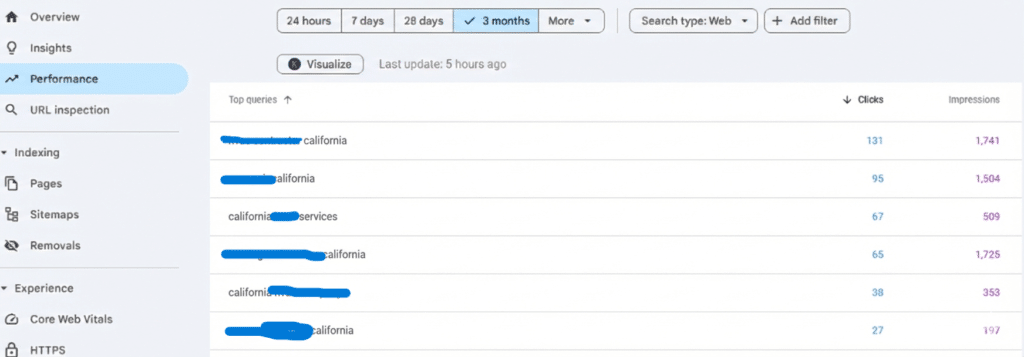
Within 3 months, the clinic achieved measurable improvements:
| Metric | Before | After |
|---|---|---|
| Average Keyword Position | ~50 | 4 |
| CTR | 0.1% | 4.9% |
| Total Clicks | 2 | 830 |
| Total Impressions | 2.3K | 16K |
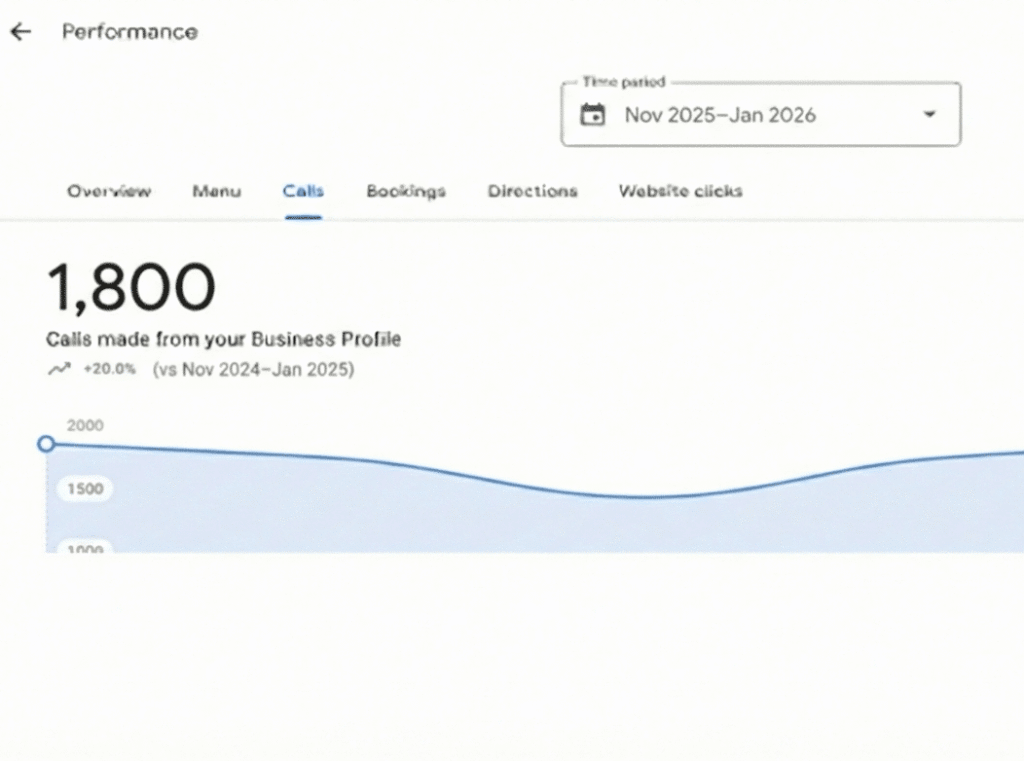
| Google Business Profile Calls | Low | Consistent Increase |
Key Outcome:
The correct service pages now appear for relevant medical searches, and inbound calls from Google have become stable and predictable.

Conclusion
For healthcare businesses, local SEO success depends on accuracy, trust, and semantic clarity.
By improving local structure, aligning content with medical intent, and optimizing the Google Business Profile, this clinic transformed its online presence into a reliable patient acquisition channel.
This case study highlights how a well-structured, compliant Local SEO strategy can deliver consistent results for medical practices.